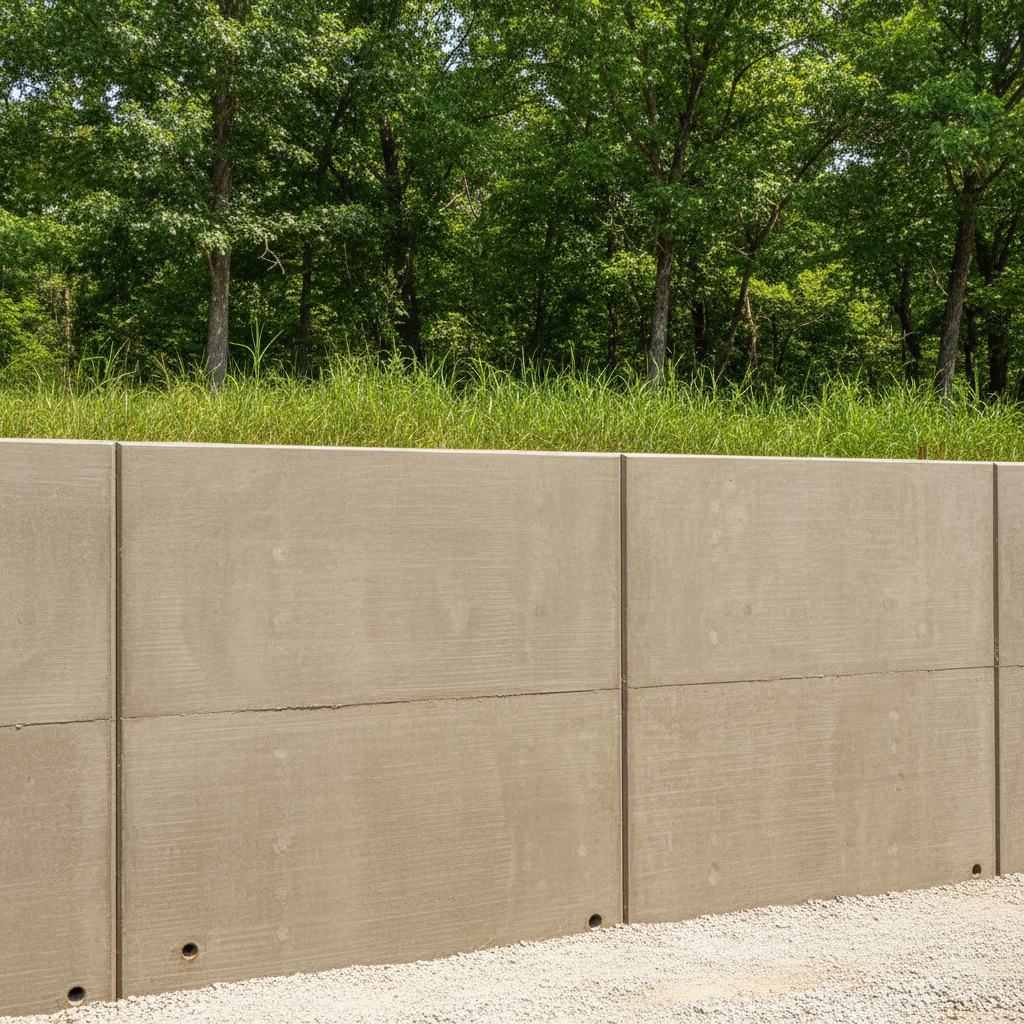
So, you are looking at your yard and thinking a concrete retaining wall might be just the thing. Maybe you have a sloped area that is eroding. You might also want to create some flat, usable space. That is a good idea. Retaining walls can really transform a property in Broken Arrow. They are not a project to jump into lightly. Here in Broken Arrow, we have clay-heavy soil as well as those occasional heavy downpours. You have to build a concrete retaining wall right, or you will be fixing it later. C&T Concrete Supplies, LLC has seen too many DIY jobs fail because folks did not know what they were getting into.
Before You Even Dig: Planning & Permits
First things first, you need a plan for your concrete retaining wall. Do not just start moving dirt. Think about the wall's purpose. Is it just decorative, or is it holding back a lot of soil? That makes a big difference for your concrete retaining wall project. You also need to consider drainage. Drainage is a big one here in Oklahoma for any concrete retaining wall. Our clay soil expands when it gets wet. This puts massive pressure on walls. A good drainage system behind the wall is important if you want it to last.
Now, let us talk about permits for your concrete retaining wall. This is where a lot of homeowners get tripped up. In the City of Broken Arrow, if your concrete retaining wall is over 4 feet tall, measured from the bottom of the footing to the top of the wall, you are going to need a building permit. If it is over 6 feet, you will need a licensed structural engineer to stamp the design. The city will then issue that permit. Even if it is under 4 feet, if it is supporting a surcharge like a driveway or a building, you might still need a permit. The City of Broken Arrow's Community Permitting and Licensing Division handles all this. You can apply through their self-service portal.
C&T Concrete Supplies, LLC's advice is this: For anything more than a small, decorative garden wall that is definitely under 4 feet and not holding back much, talk to a pro. They will know the local codes as well as the ins and outs of the permit process. They can help you navigate the permit process. Trying to skirt these rules can lead to big headaches as well as costly fines later on.
During the Build: DIY vs. Pro Hands-On
Okay, let us say you have your permits for your concrete retaining wall. Or maybe you determined you do not need one for a small project. Now for the actual construction. What can you realistically do yourself?
DIY-Friendly Projects (Small & Simple)
If you are building a low concrete retaining wall, say 1-2 feet high, and it is purely for landscaping or a small garden bed, you can probably tackle this yourself. We are talking about segmental concrete blocks that interlock. You will need to do a few things for this type of concrete retaining wall. Our team suggests you:
- Lay out your wall: Mark where your concrete retaining wall is going.
- Dig a trench: This needs to be level. It also needs to be deep enough for a good gravel base as well as for the first course of blocks to be partially buried. Remember our frost line here in Oklahoma is typically 12-18 inches. Your footing needs to be below that to prevent frost heave.
- Install a gravel base: Compacted gravel is important for drainage as well as for stability.
- Lay the first course: This is the most important step for your concrete retaining wall. It needs to be perfectly level.
- Stack subsequent courses: Follow the manufacturer's instructions for your specific blocks.
- Add drainage: A perforated pipe behind the wall, surrounded by gravel, is important.
- Backfill: Use gravel directly behind the wall. Then fill with soil.
It is still labor-intensive. You will want a helper or two for your concrete retaining wall project. You can find plenty of guides as well as videos online for these types of walls.
When to Call in the Big Guns (Professionals)
For anything beyond a small, non-structural concrete retaining wall, you absolutely need a professional. C&T Concrete Supplies, LLC is talking about these kinds of projects:
- Walls over 3-4 feet tall: The pressure on these concrete retaining walls is huge. This is especially true with our expansive clay in Broken Arrow. You need proper engineering, reinforcement like geogrid, as well as a solid drainage system.
- Walls supporting significant loads: If it is holding up a driveway, a patio, or part of your house's foundation, that is structural work. Do not mess around with that.
- Complex designs: Curves, multiple tiers, or walls integrated with steps. These require specialized skills for a concrete retaining wall.
- Poor soil conditions: If you have particularly unstable or wet soil, a professional will know how to handle it. They will do soil analysis as well as design the wall to suit.
- Poured concrete walls: These are not just stacking blocks. They involve forms, rebar, as well as precise concrete pouring. This is a whole different ballgame.
A good contractor, like C&T Concrete Supplies, LLC, has the experience. They also have the right equipment. Our team understands the soil mechanics unique to areas like Broken Arrow. We will make sure there is proper foundation preparation as well as drainage. These are important for how long your concrete retaining wall lasts. C&T Concrete Supplies, LLC will also handle the heavy lifting. We will make sure the project is done efficiently as well as safely.
After the Wall is Built: Maintenance Matters
So, your concrete retaining wall is up. This is true whether you built it or had a professional do it. Your job is not over. Concrete retaining walls, especially here in Broken Arrow with our weather, need a little care. This care keeps them looking good as well as doing their job.
- Regular Inspections: Walk around your concrete retaining wall at least twice a year. Do this especially after heavy rains or a freeze-thaw cycle. Look for cracks, bulging, leaning, or any signs of movement. Catching small issues early can prevent big problems.
- Keep it Clean: Dirt, leaves, as well as organic debris can build up. This leads to staining as well as even biological growth like moss or algae. A stiff brush and water usually do the trick. For tougher stains, a diluted bleach solution or concrete cleaner works. Just make sure to rinse thoroughly.
- Check Drainage: This is very important for your concrete retaining wall. Make sure any weep holes or drainage pipes are clear of debris. If water cannot escape from behind the wall, it builds pressure. That is a recipe for failure.
- Manage Vegetation: Roots from nearby trees as well as shrubs can put pressure on your wall. They can even get into the structure. Keep plants with aggressive root systems away from the wall.
- Address Minor Repairs: Do not ignore small cracks or loose blocks on your concrete retaining wall. Use appropriate repair materials to fix them quickly.
A well-built as well as well-maintained concrete retaining wall will add value to your Broken Arrow home. It will also add functionality for many years. Do your homework. Know your limits. Do not hesitate to call in the experts when the job calls for it. It is an investment that pays off for your Broken Arrow property.