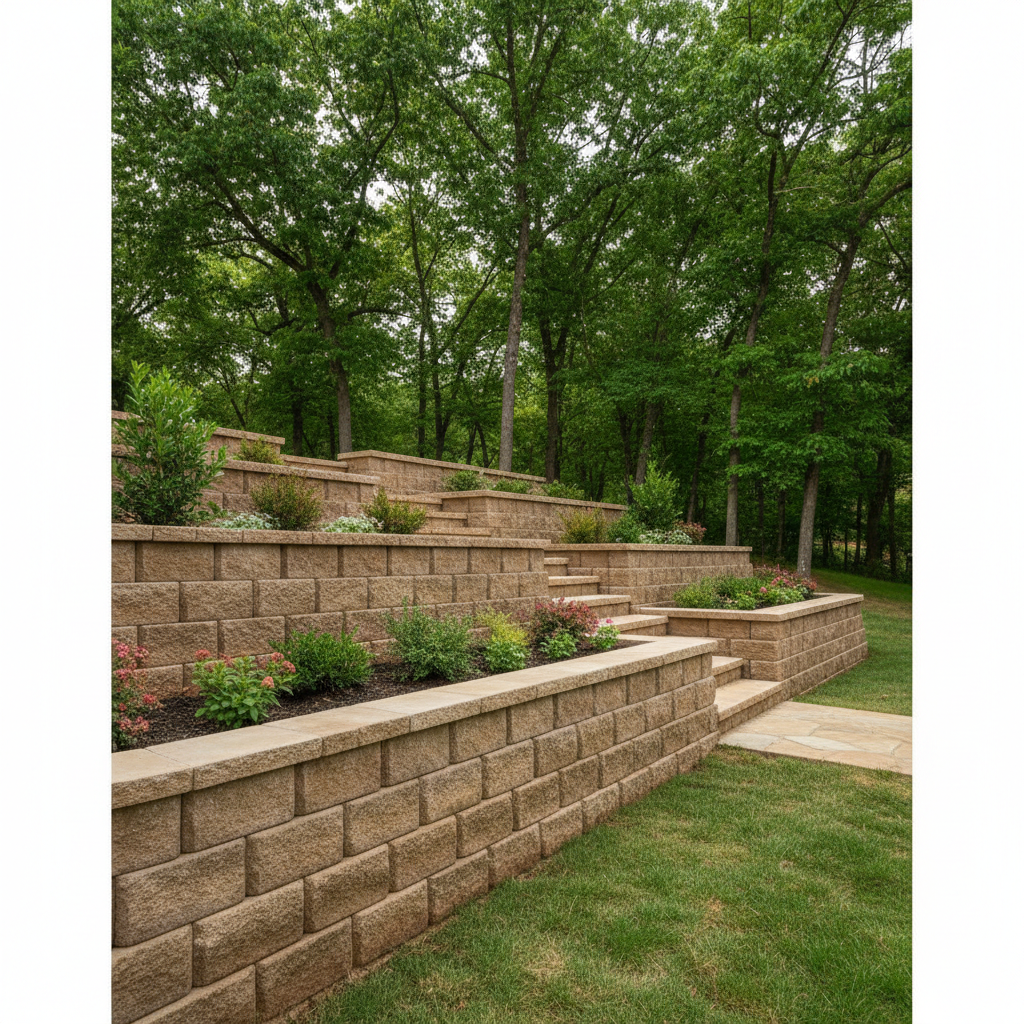
You're looking at your yard, maybe it's got a slope, or you just want to create some usable space, and a concrete retaining wall seems like the perfect solution. It often is! A well-built wall can transform your property, prevent erosion, and add serious curb appeal. But I've seen my fair share of projects go sideways because folks didn't know what to look out for. Here in Broken Arrow, with our sometimes-unpredictable weather and clay-heavy soil, getting it right is even more critical.
Mistake #1: Skipping the Site Assessment & Engineering
This is probably the biggest and most common mistake I see. Homeowners think, "It's just a wall, right?" Wrong. Especially with concrete, you're dealing with significant weight and pressure. If your wall is over a certain height – often around 4 feet, but it varies by local code – you absolutely need an engineer's stamp on the plans. Even if it's shorter, a professional assessment is smart.
What happens if you skip it? Well, you might build a wall that can't handle the soil pressure behind it, especially after a heavy rain. Our soil here in Oklahoma can get saturated and expand, pushing against that wall with immense force. Without proper design, drainage, and foundation, that wall isn't going to last. It'll crack, lean, or worse, collapse. Then you're not just paying for a new wall, you're paying to tear down the old one and deal with the mess. Don't cut corners here; it's literally the foundation of a successful project.
Mistake #2: Not Understanding Drainage Requirements
This ties directly into the first point, but it's so crucial it deserves its own mention. Water is the enemy of any retaining wall if it's not managed properly. You can build the strongest concrete wall in the world, but if water builds up behind it, it's going to fail. I've seen walls in neighborhoods like Battle Creek or Forest Ridge start to bulge because the drainage wasn't considered.
You need a robust drainage system behind the wall. This usually means a layer of gravel or crushed stone directly behind the wall, a perforated drain pipe at the base of that gravel, and weep holes through the wall itself. The drain pipe needs to be sloped to carry water away from the wall, often daylighting at the ends or connecting to a storm drain system. If a contractor talks about building a retaining wall without mentioning drainage, that's a huge red flag. Ask them about it. If they brush it off, find someone else.
Mistake #3: Focusing Only on the Lowest Bid
Look, I get it. Everyone wants to save a buck. But when it comes to concrete retaining walls, the cheapest bid is almost never the best bid. In fact, it's often a sign of trouble. A contractor who gives you a significantly lower price than everyone else might be cutting corners on materials, labor, or even skipping necessary steps like permits or engineering.
I've seen contractors use rebar that's too thin, or not enough of it. I've seen them skimp on the concrete mix quality or not prepare the base properly. These aren't things you'll see on day one, but they'll show up a year or two down the road when your wall starts to crack or shift. Get multiple bids, absolutely, but compare them on value, not just price. Ask what's included. Ask about their experience with similar projects. A reputable company, like C&T Concrete Supplies, LLC, will give you a fair price for quality work, and they'll be transparent about what that includes.
Mistake #4: Not Checking References & Insurance
This one seems obvious, but people still skip it. Before you hire anyone, verify they're licensed and insured. Seriously, ask for proof of liability insurance and workers' compensation. If they don't have it, and someone gets hurt on your property or your property gets damaged, you could be on the hook. It's not worth the risk.
Also, ask for references. Call them. Go look at the work if you can. A good contractor will be proud to show off their past projects. You want to see walls that are straight, free of major cracks, and still standing strong years later. Don't just take their word for it; do your homework.
Mistake #5: Ignoring Permits and Local Codes
Building codes are there for a reason: safety and structural integrity. In Broken Arrow, depending on the height and location of your retaining wall, you'll likely need a permit. This usually involves submitting plans to the city for approval. Your contractor should be familiar with these requirements and handle the permit process for you, or at least guide you through it.
Ignoring permits can lead to fines, stop-work orders, and even having to tear down a newly built wall if it doesn't meet code. It's a hassle you don't need. Make sure your chosen contractor is knowledgeable about Broken Arrow's specific building codes for retaining walls and includes the permit process in their plan.
Building a concrete retaining wall is a significant investment, and you want it to last. By avoiding these common mistakes, you'll be well on your way to a successful project that adds value and beauty to your Broken Arrow home for years to come.